How to read food labels: nutrition values, ingredients and claims

Two almost identical products on the shelf can be nutritionally very different. Everything you need is printed on the pack, but in small type and in a confusing order. Once you know what to look at first, comparing takes a few seconds.
What a pack must tell you
European food information rules require packaged foods to show nutrition values per 100 grams or 100 millilitres. The mandatory items are energy in both kilojoules and kilocalories, plus fat, of which saturates, carbohydrate, of which sugars, protein and salt in grams. A manufacturer may add per portion values, but it decides the portion size itself.
The values apply to the product as sold. If you prepare it according to the instructions, for example with milk, the finished portion has different numbers.
Always compare the per 100 gram column
The per 100 gram column is the only fair basis for comparison, because it is the same on every pack. The per portion column tells you what you actually eat. Use it only after checking whether the stated portion matches yours.
A good rule of thumb: within one product group, pick the option with less saturated fat, sugar and salt, and more fibre.
Eight quick rules for reading a food label
The ingredient list shows the proportions
Ingredients are always listed by weight, from the largest share to the smallest. If sugar or vegetable oil is among the first three, the product is largely made of them. Allergens such as wheat, milk, soy and nuts must be highlighted in the list, usually in bold.
Many products also state the percentage of the main ingredient. That is a useful number for patties, fish fingers and fruit yoghurts.
Claims and logos: what they really mean
Nutrition claims have fixed limits. A product may be called a source of fibre when it contains at least 3 grams of fibre per 100 grams, and high in fibre at 6 grams or more per 100 grams.
Words like natural, homestyle or light contain no numbers at all. Always verify them in the table.
Salt, sugar and fibre in a normal week
The World Health Organization recommends less than 5 grams of salt a day and free sugars below 10 percent of daily energy, ideally below 5 percent. Most salt comes from ready meals, bread, cheese and cold cuts, so comparing labels adds up quickly.
Adults are advised to eat roughly 25 to 35 grams of fibre a day, which most people do not reach.
Putting it into practice
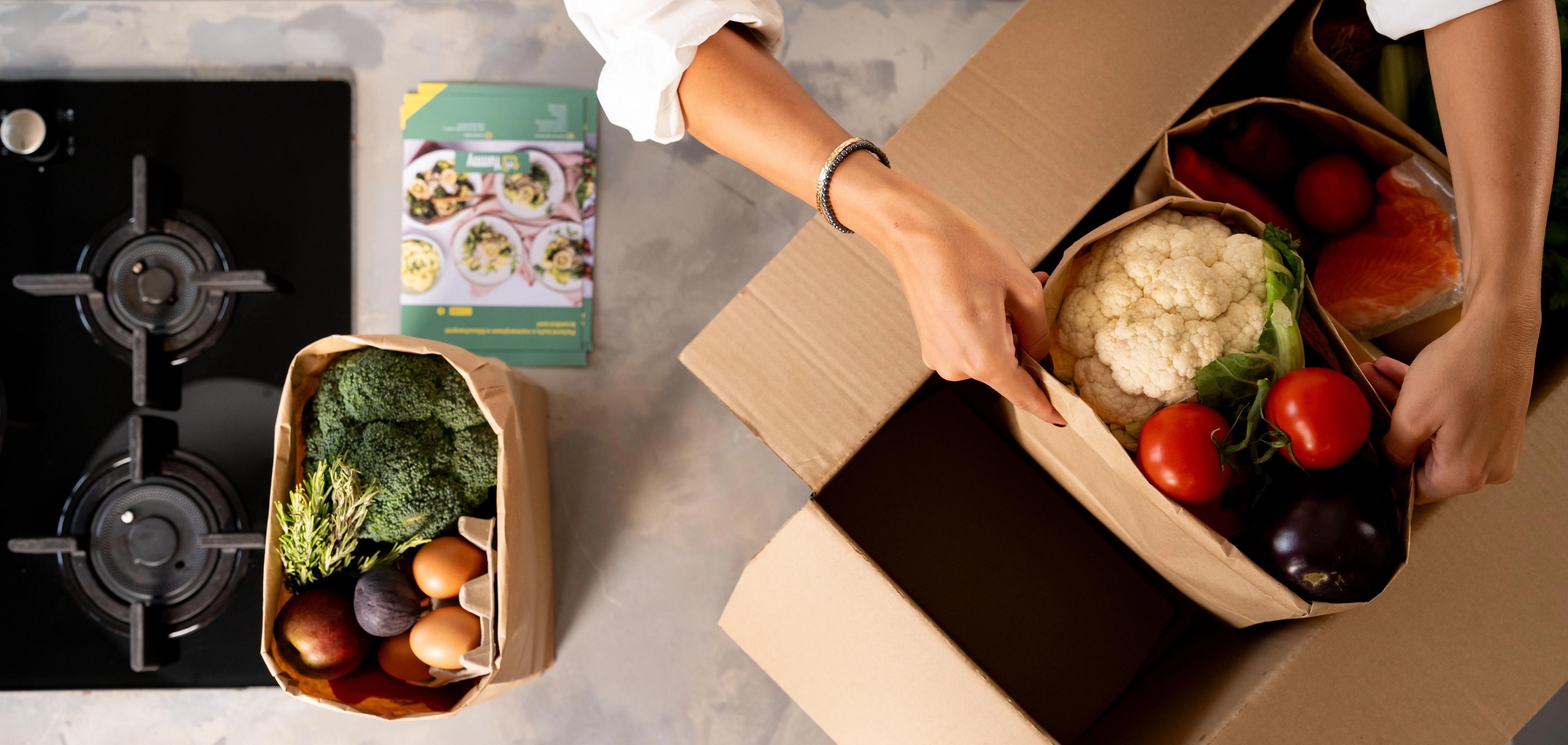
Cooking at home solves most of this without reading labels: when a meal is built on vegetables, a whole grain side and a protein, salt and sugar stay reasonable on their own. Yummy delivers pre measured ingredients and recipes for exactly this. A good weeknight example is Tex-Mex frittata with minced meat and cherry tomatoes, where vegetables meet protein.
Make a habit of checking two things: the per 100 gram column and the first three ingredients. That takes you surprisingly far.
Less label reading, more time for cooking
Yummy delivers fresh ingredients and clear recipes, so your meals are built from vegetables, whole grains and protein instead of long ingredient lists.